If you run a business in India wondering whether generating some of your own electricity makes sense, the honest answer is: at the right site, yes — and wind is a source most facilities teams haven’t seriously looked at yet.
Not instead of the electricity board. Not instead of solar you’ve already installed. Alongside both — a measured slice of on-site generation, day or night, monsoon included, offsetting a bill that’s usually already higher than a home’s.
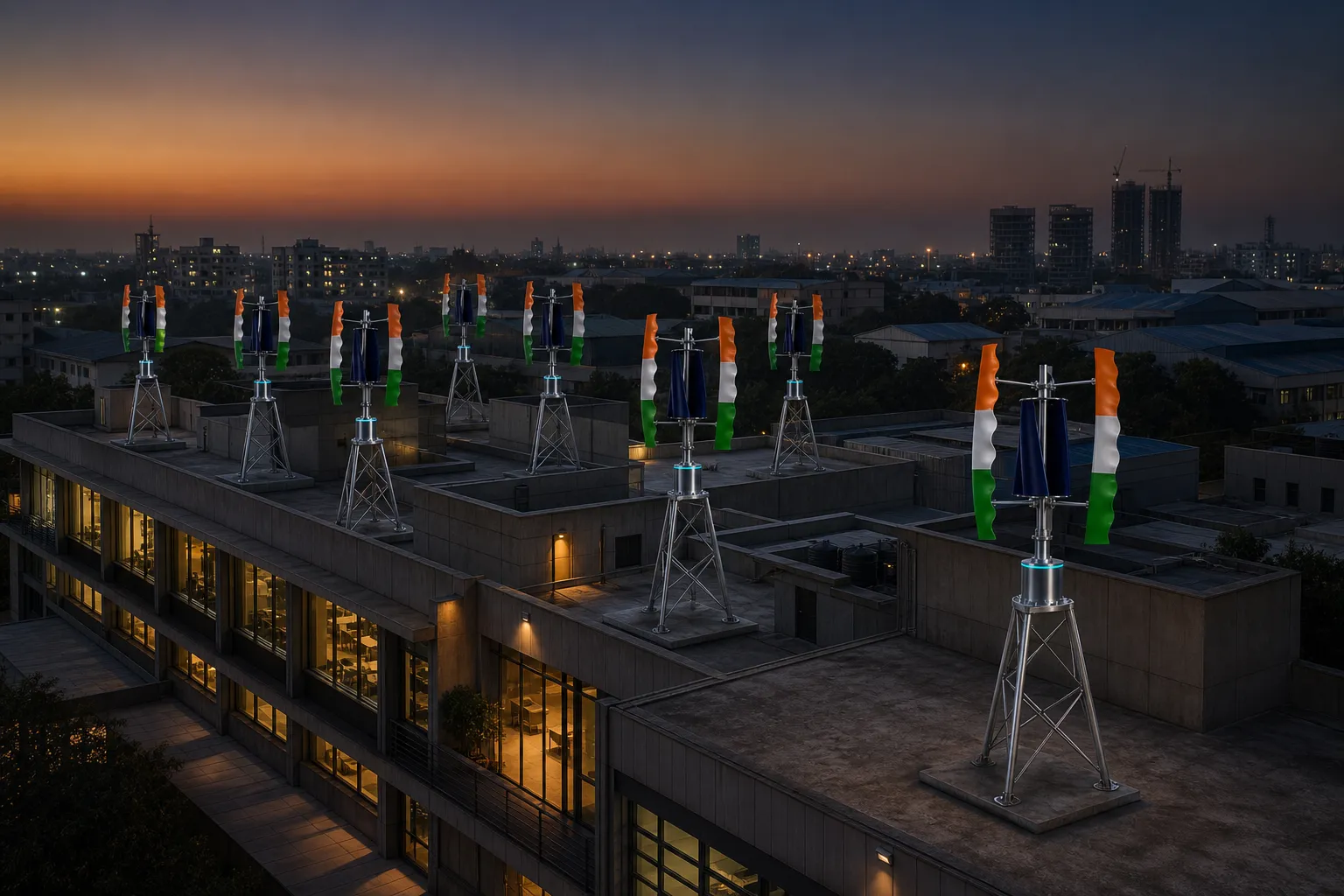
One machine is a start. The real story of wind energy for business in India is scale: a farm of GIVARA ONE machines across a campus’s roofs, each in a corner that measurement approved.
This page is the map — warehouses and logistics parks, factories and cold storage, hotels and offices, housing societies, campuses and farms each get their own deep dive as we publish them, sector by sector, in the coming weeks.
The wind above India is already a national asset.
Businesses pay more for every single unit.
Why businesses pay more for every unit
Commercial and institutional electricity in India is typically priced well above what a household pays for the same unit — commercial users effectively cross-subsidise other categories.
Cold storage, multi-shift production, hotel HVAC, 24x7 security lighting: the meter turns faster, and it keeps turning after homes have gone dark.
It’s why “how to reduce the electricity bill” is asked as urgently in factories and industry as in any home — and why any generation a business adds is offsetting units priced at the commercial rate, not the residential one.
India's demand peaks when solar has gone home.
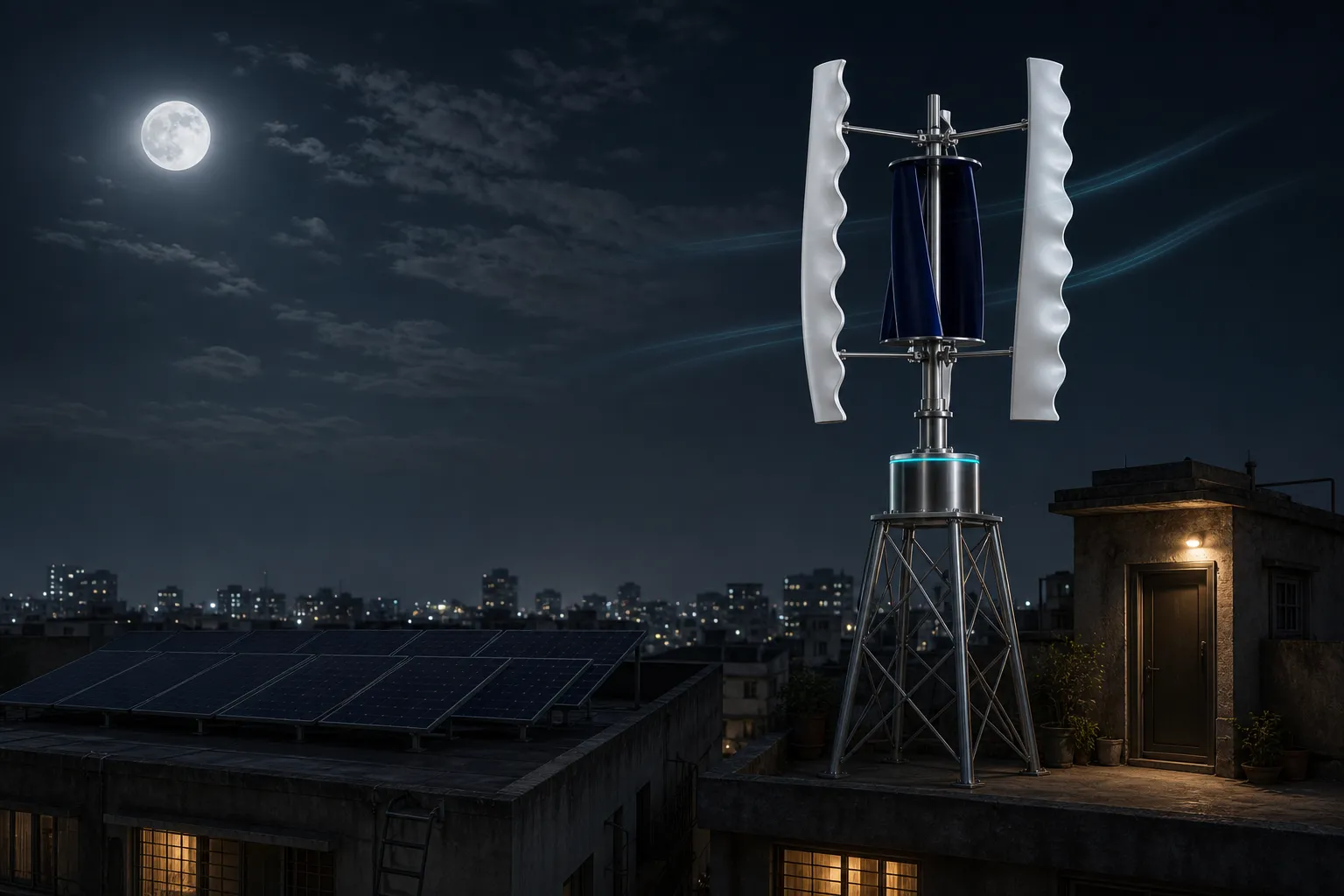
A record 247 GW demanded at 10:29 at night.
India’s highest-ever electricity demand served during non-solar hours — 247.21 GW — was met at 10:29 pm. Businesses live inside that pattern: evening shifts, overnight refrigeration, security lighting.
Solar owns the day and should; wind generates whenever air moves, including the hours and monsoon weeks solar structurally can’t reach. Source: Ministry of Power, via ETV Bharat.
Can a business generate its own electricity from wind in India?
At a suitable site, yes. Commercial wind energy at rooftop scale finally has a machine built for it: GIVARA ONE, a full-size rooftop wind machine — a dual-rotor vertical-axis design that generates from whatever airflow reaches it, whichever direction it blows from.
It sits on a site-specific stand in one corner of a roof or open site and works through the hours a business runs hardest.
None of this replaces the electricity board as the primary supply. It offsets a measured, metered slice of the bill next to it.
One machine is a start. A farm is the story.

No machine on your balance sheet.

You buy the electricity. Never the machine.
GIVARA installs the unit, owns it, insures it and maintains it — backed by the GIVARA Care layer that watches every machine GIVARA puts up.
The business pays only for the electricity it actually generates, measured at its own meter, priced below the electricity board’s rate — a modelled commercial target that varies by site, never a guarantee.
Wind without buying a turbine
There’s no machine to purchase and no upfront machine cost to carry on a balance sheet, which shifts the decision from “should we capitalise a turbine” to something much smaller: “is our site worth measuring.”
How the wind-as-a-service model works covers the mechanics of ownership, billing and maintenance for your finance team.
Small wind for commercial buildings: what actually fits on a roof or site
GIVARA ONE’s rotor is roughly five feet across on a compact stand — one corner of a terrace, factory yard or open plot, not the acreage a utility wind farm needs.
And because the footprint is a corner, a large site rarely stops at one: several corners across a campus’s roofs can each host a machine, wherever the measurement finds usable airflow.
Where wind works: the kinds of sites that suit it
A cold storage’s overnight refrigeration looks nothing like a hotel’s evening curve, which looks nothing like a society’s common-area load. Each business type gets its own full story in the family of use cases.
The general shape: if your operation runs loads outside daylight hours, or through the weeks solar underperforms, on-site wind deserves a serious look.
A decade of climb, and a cleaner grid to help.
Don't take our word for it.
What a site assessment tells you before any commitment
Nothing here gets promised without measurement first. GIVARA measures the actual site — real wind data over about a week, not a map-based guess.
Two roofs on the same street can behave completely differently. If the data supports it, a site-specific projection follows; if it doesn’t, GIVARA says so directly and walks away.
For how site fit really gets assessed, see what actually works on Indian rooftops.
Who this fits, honestly
The facilities head or owner-operator who has solar, is considering solar, or has noticed that a chunk of the bill comes from hours and seasons solar can’t touch.
Not every commercial roof qualifies — some won’t, and only the measurement decides. Comparing against a home-scale installation instead? Home wind turbine costs in India covers that version.
Wind energy for a business in India isn’t a replacement for anything you rely on — not the electricity board, not your solar.
It’s an honestly-sized piece of clean energy for a business: it works through the hours your existing sources structurally can’t reach, without a capital purchase, and it’s never confirmed until your site is measured. Start with GIVARA ONE to see the machine itself.
Frequently asked questions
Is wind energy profitable for a business?
It depends entirely on the site. At a suitable location, on-site wind offsets units priced at the commercial rate, and since there’s no machine to buy, the economics come down to whether the measured generation is worth the per-unit price. A site assessment turns that from a guess into an answer.
Does it need a large open site?
No. The rotor is roughly five feet across on a compact stand in one corner of a roof, yard or plot. What matters more than space is whether that corner gets usable airflow — exactly what the assessment checks.
What about the solar we already installed?
Wind doesn’t compete with solar for roof space or hours. Solar owns daylight; wind works whenever air moves, including evenings, nights and monsoon weeks. The two sit in different corners of the same site, each doing its own job.
Who maintains the machines?
GIVARA does — installation, ownership, insurance and upkeep all stay with GIVARA, whether a site hosts one machine or a farm of them. More in who pays if it breaks.
Which Indian states suit commercial wind?
State alone doesn’t answer this — a specific site’s wind matters far more. Coastal stretches and open plots often have an advantage, but a well-placed roof inland can outperform a poorly placed one on the coast. That’s why everything starts with measuring the actual site.
Your roof could be next — measurement first, always
TELL US ABOUT YOUR SITE