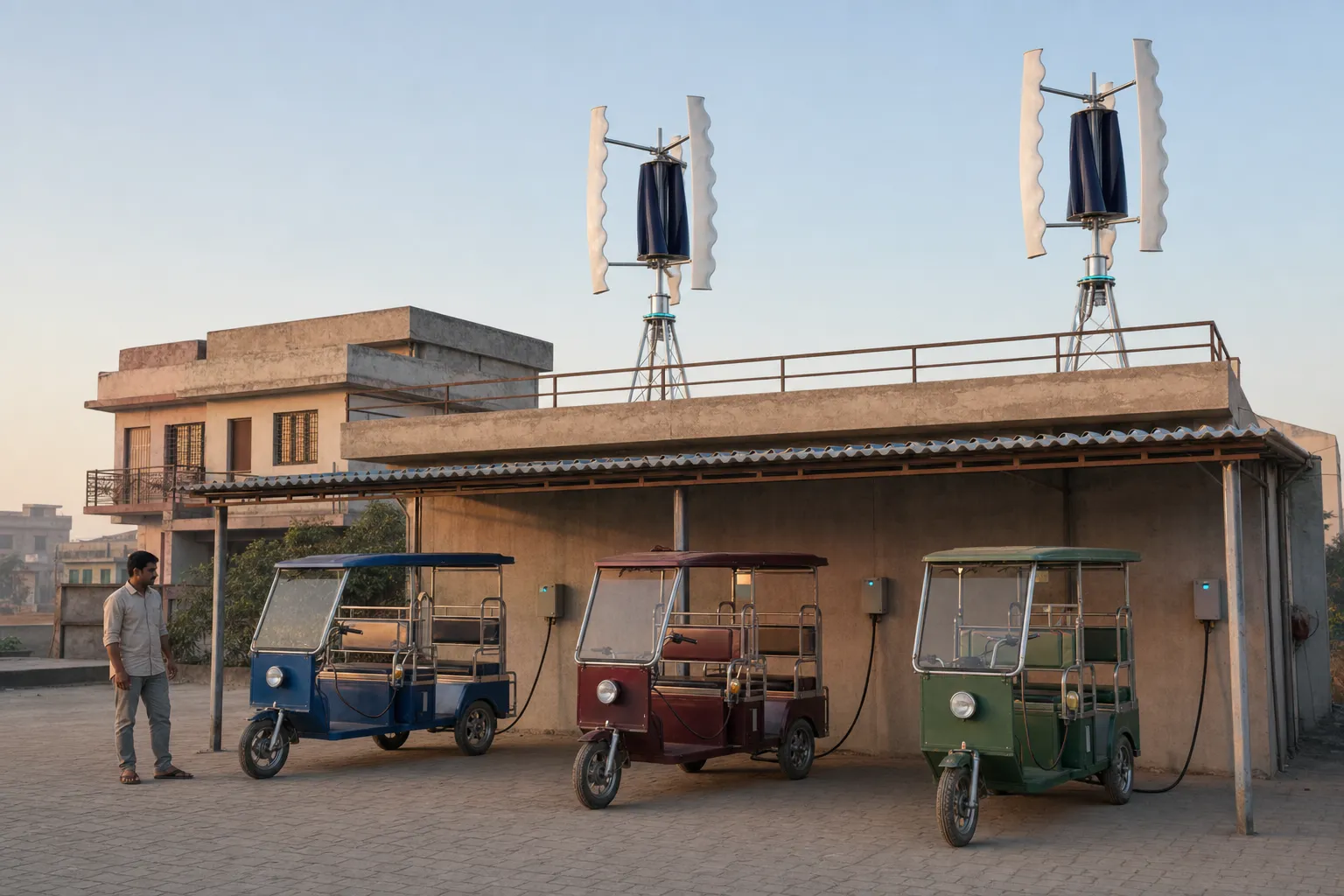
If you’re asking what it takes to open an e-rickshaw charging station, here’s the direct answer first: a full charge usually happens overnight, many drivers plug in after the last fare, and the real cost pressure isn’t the electricity itself — it’s what many drivers already pay informally to get it.
What GIVARA is building toward is simpler than it sounds: rooftop wind added alongside the electricity board’s connection at that same charging point, wherever a site’s measurement supports it.
This page is one branch of the wider map of wind energy for business in India.
The battery is the working day.
E-rickshaw charging and a driver’s working day
For an e-rickshaw driver, the battery isn’t a convenience feature — it’s the entire working day. No charge, no trips, no deliveries, no income for that day.
Everything else about the job — which routes to take, how many hours to put in, whether to push for one more fare before dinner — gets planned around when and where the battery gets topped up.
That makes charging cost a daily working expense in a way it rarely is for anyone else, which is exactly what the strip below is trying to show honestly: the charge going in, and the working day it’s asked to carry.
India's electric three-wheeler fleet already runs at national scale.
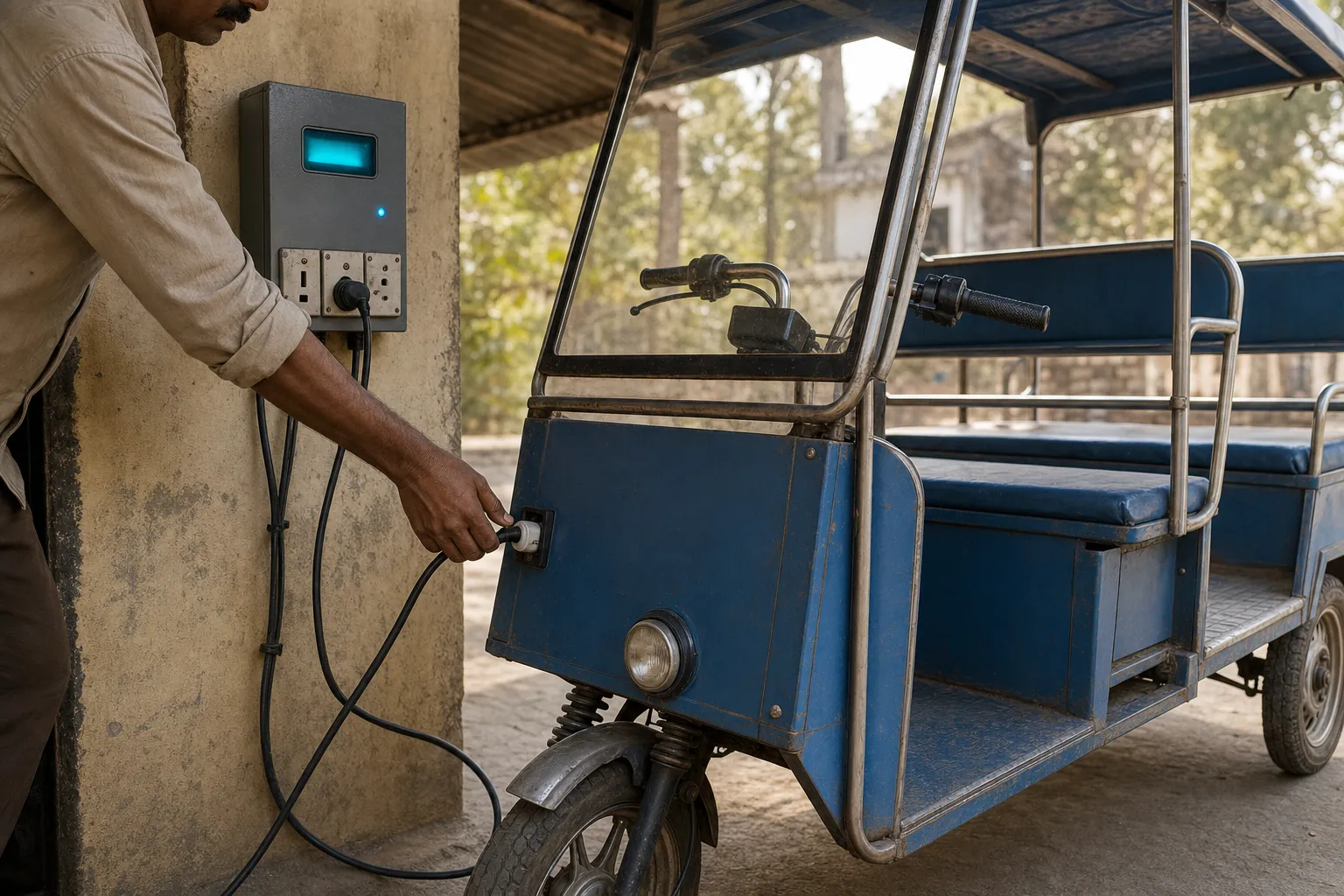
The e-rickshaw charging squeeze nobody meters.
Delhi’s registered e-rickshaw fleet runs to roughly 1.2 lakh vehicles, set against 543 public charging stations to serve them — about one public station for every 221 registered e-rickshaws, going by Delhi government data reported by The Patriot in December 2024.
That gap doesn’t stay theoretical for long: electricity board officials in Delhi have claimed, as Rest of World reported in April 2025, that a large share of the city’s e-rickshaws are charged through power theft — not because drivers are careless with the rules but because a fair, metered option often isn’t within reach.
Nobody is naming a villain here — not the electricity board, not any particular person or group. The villain is the squeeze itself: an unmetered, take-it-or-leave-it price for something a driver has no real alternative to, night after night.
A fair, metered charging point — properly connected to the electricity board’s supply — is the plain fix for a problem that’s really about access, not attitude.
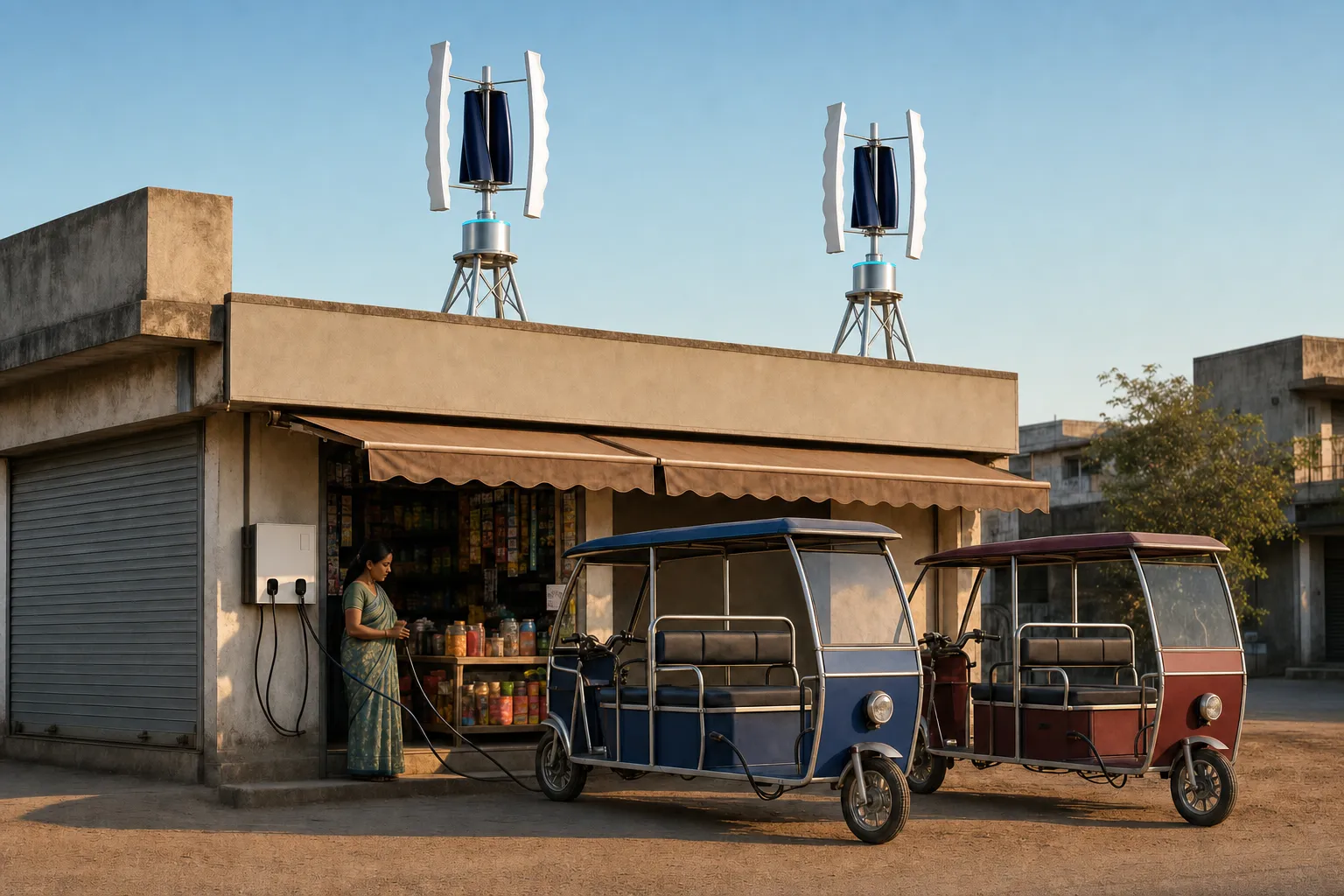
What an e-rickshaw charging station setup involves
Opening an e-rickshaw charging station rests on the same foundation as any electrical business: a board connection. That part is non-negotiable, and it’s also more straightforward than most people assume.
EV charging is a de-licensed activity under the Ministry of Power’s 2024 charging guidelines, as Power Line reported — no separate licence required to run charging; the board connection is the foundation. The electricity board is required to connect a new charging point within 3 to 90 days, depending on the area.
Where a site’s wind measures well, GIVARA ONE — a compact rooftop wind machine — can add supply to the point in useful hours beyond the sun’s, wherever the wind allows, with each machine taking only a corner of the roof.
Then the service model: there’s no wind machine to buy — a refundable deposit is parked with GIVARA, held, not spent, and returned when the machine comes home. GIVARA installs it, owns it, insures it, and maintains it, on a roof that a real measurement has confirmed has usable wind, backed by the GIVARA Care layer built to watch every machine GIVARA puts up.
What a small entrepreneur pays for is the electricity it actually generates, metered at the point, targeted below the electricity board’s rate (modelled, varies by site).
The costs that remain — the board connection, the wiring, the space for a shed and a queue of vehicles — are still real, and still the entrepreneur’s to plan for.
Overnight e-rickshaw charging, and where wind fits
Many e-rickshaws charge overnight — the vehicle comes home after the last fare, plugs in, and heads out again the next morning full.
That window matters more than it looks: it’s the stretch when solar panels rest, because the sun set hours ago — and wind doesn’t follow the sun, though how much blows at night varies by site and season.
Overnight, solar’s rest can be wind’s opportunity. How the two share a roof is explored further in wind vs solar for Indian homes.
None of this means a wind machine runs the charging overnight on its own. It means that rooftop wind can add a real slice of supply to a point that’s still connected to, and still primarily drawing from, the electricity board.
चार्जिंग पॉइंट कैसे खोलें?
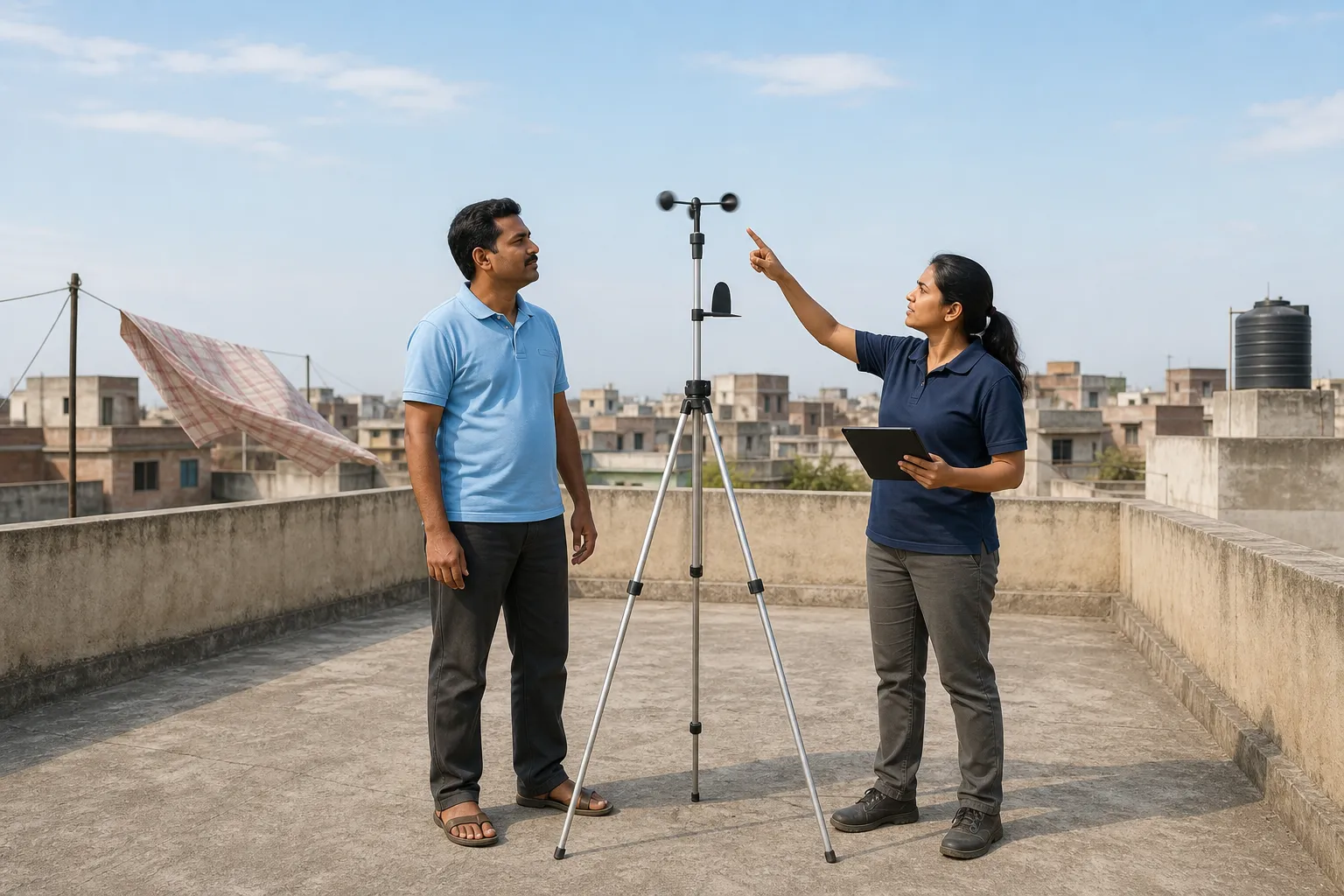
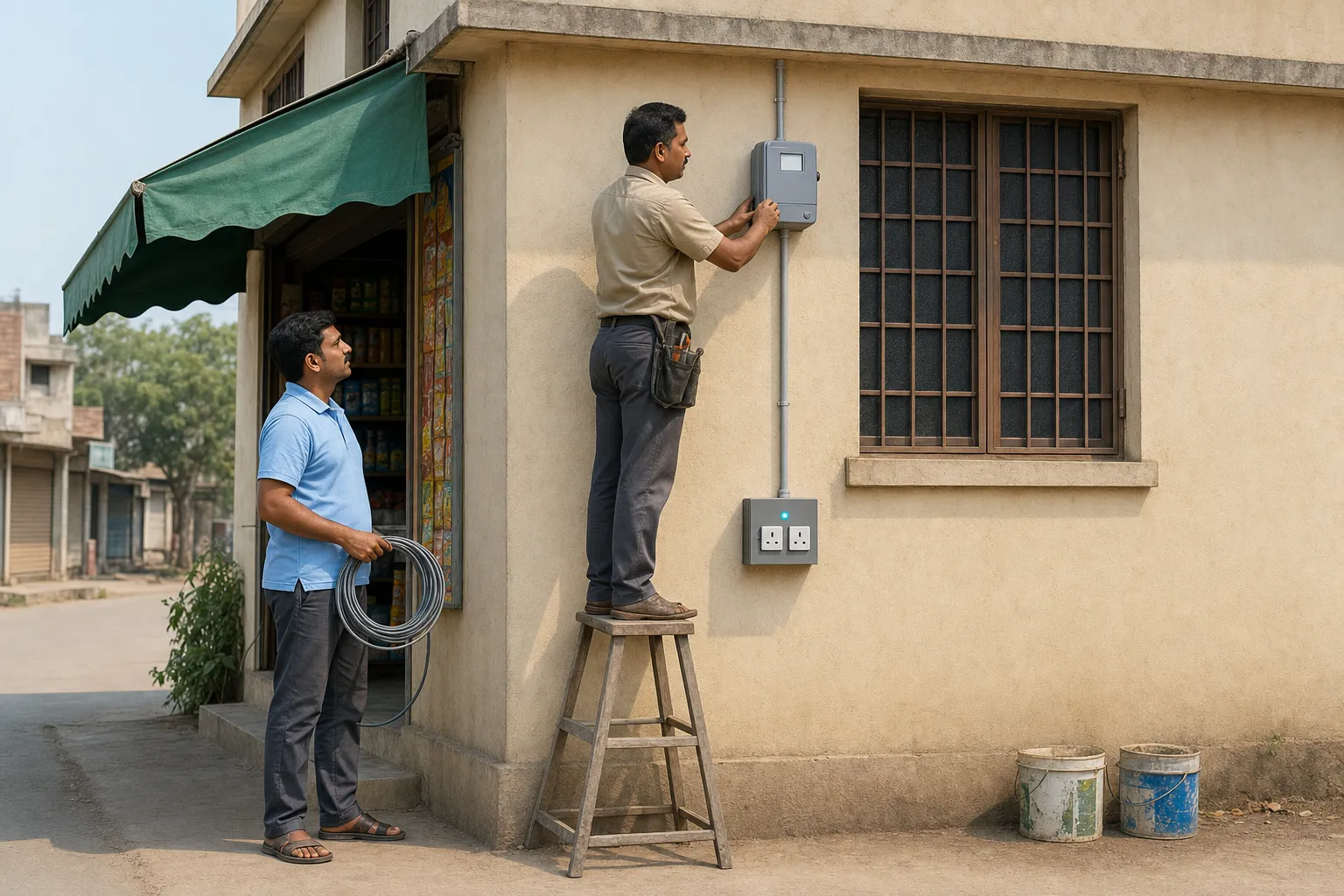
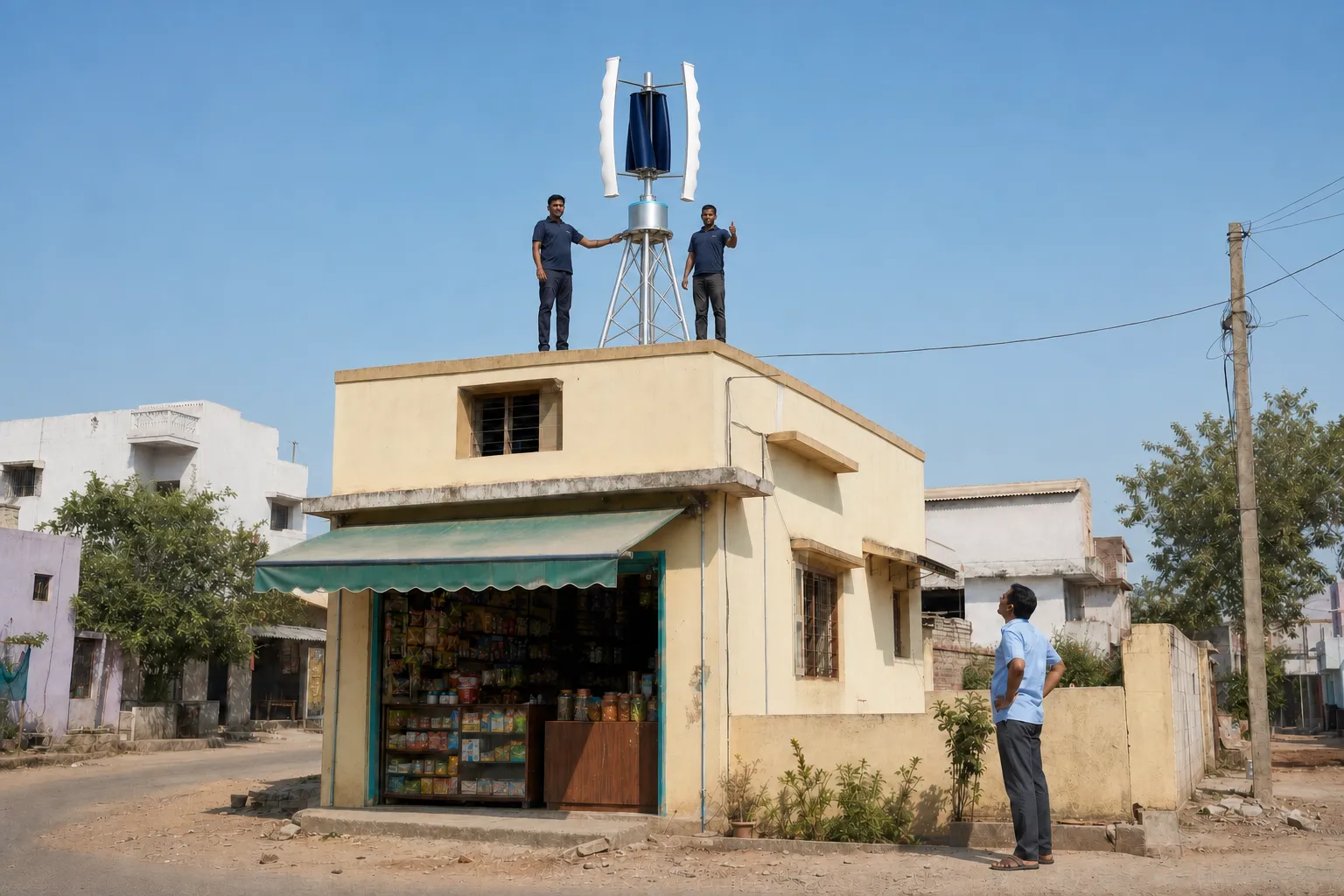
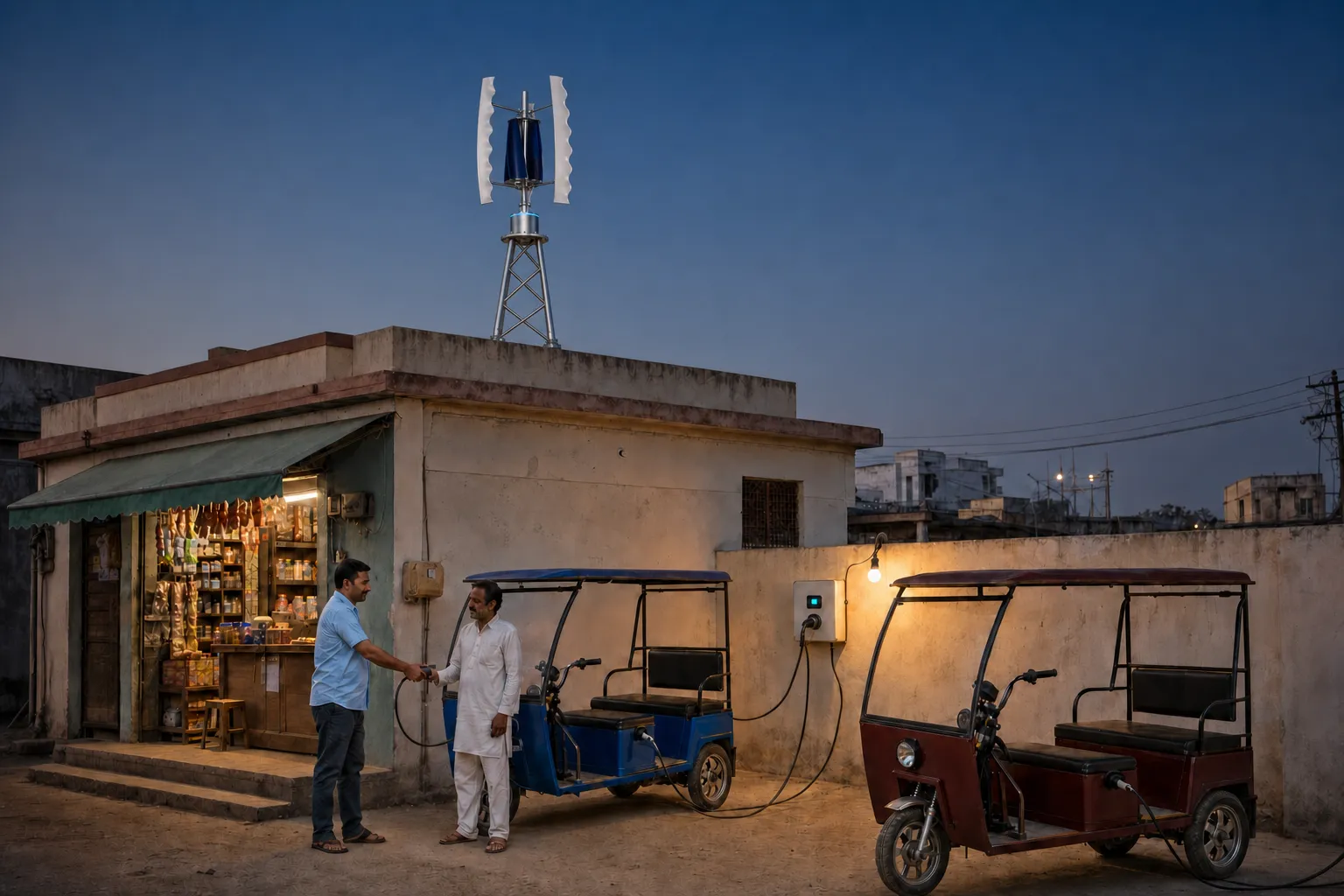
How to open an e-rickshaw charging point, step by step
In words, briefly — charging point kaise khole: the honest order is measure, connect, then install.
First, about a week of real, on-site measurement — many roofs won’t measure well, and does my roof have enough wind explains why that gets said plainly. Second, the board connection — de-licensed, and the true foundation of any charging point, wind or no wind.
Only third, where the site measured well, the machine: Wind Energy-as-a-Service, explained covers the service model, GIVARA ONE is the machine itself, and what home wind costs walks through how that conversation goes.
The connection, wiring, and space stay the entrepreneur’s to plan. Charging is one entry in a wider family of livelihood applications: use cases.
E-rickshaws are already a national story.
Frequently asked questions
Can a wind turbine charge an e-rickshaw directly?
Not directly, no. A rooftop wind machine feeds electricity into a charging point’s supply alongside its board connection — it supplements the point, and the point charges the vehicle. Framing it as “wind charges the rickshaw” overstates what rooftop wind can do on its own.
What does it cost to set up an e-rickshaw charging station?
In words rather than numbers: a board connection, wiring, and space for the shed and the queue are real costs, and they stay the entrepreneur’s to plan for regardless of wind. The one line item a service model removes is the machine itself — there’s nothing to buy there (a refundable deposit is parked with GIVARA, held, not spent), only units to pay for once it’s generating.
Is this running anywhere today?
Honestly, no — not yet. This is an application GIVARA is building toward as part of its wider livelihood-focused use cases, and site assessments decide where it actually starts.
How long does a full e-rickshaw charge take?
A full charge can take up to six to seven hours, depending on the battery, usually overnight — the vehicle comes home after the last fare, charges through the night, and heads out again the next morning full.
Does wind replace the electricity board connection at a charging point?
No. The board connection stays the primary supply for any charging point. Wind, where a site’s measurement confirms it’s worth adding, supplements that supply — it never replaces it.
For what the service itself costs, and the deposit’s amount and terms, the GIVARA ONE page is the one place GIVARA puts them.
Charging is one small but real part of a bigger livelihood-focused family of applications GIVARA is exploring — read more in use cases to see where else on-site wind might fit.
Measured on your roof first — never promised up front
TELL US ABOUT YOUR SITE