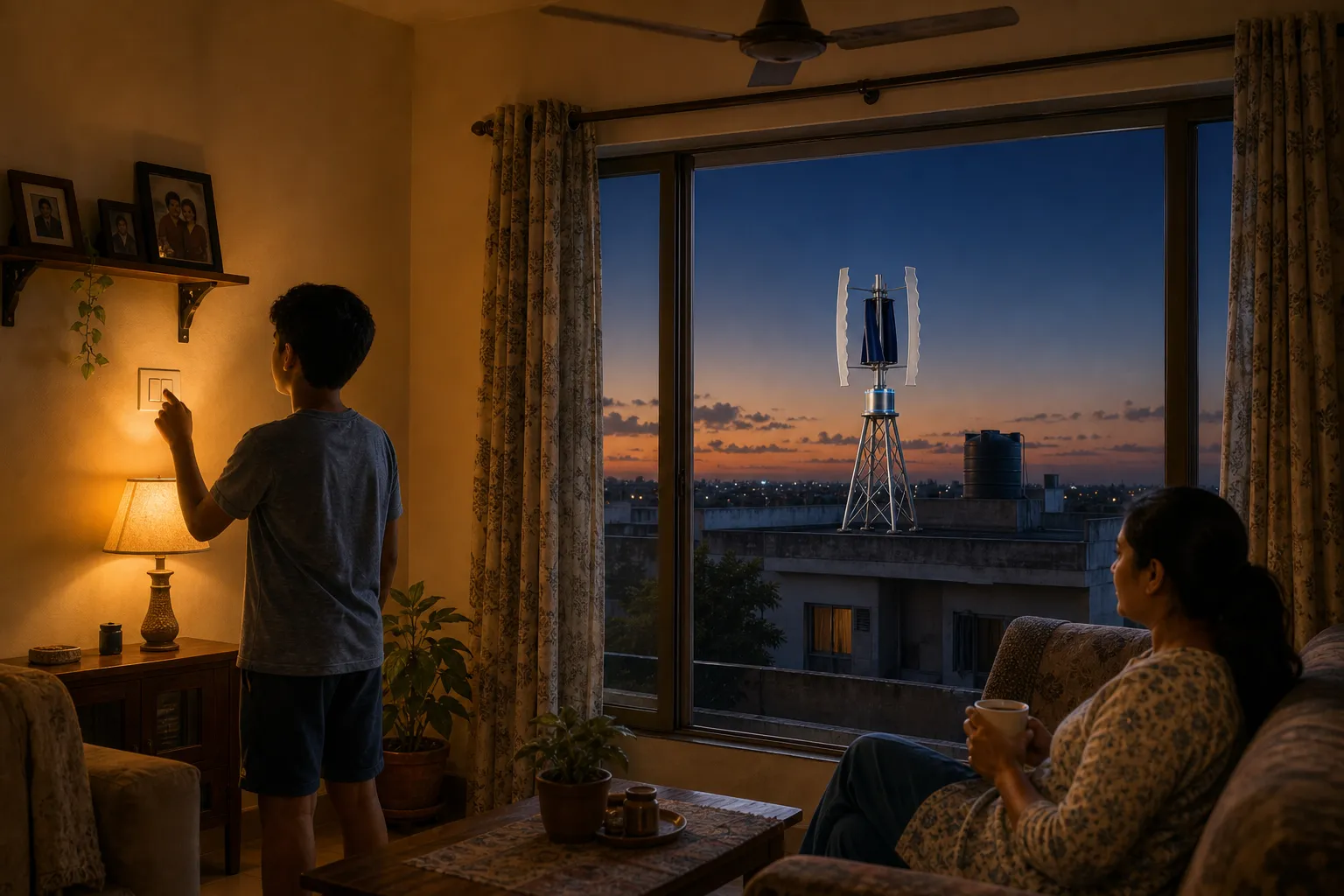
Ask most people what it takes to generate their own electricity and they’ll describe a purchase — a panel, an inverter, a battery, a warranty card, an AMC contract, a technician’s phone number saved for the day something trips.
Somewhere along the way, clean energy quietly became a second job — one where the homeowner is also the plant operator, the maintenance crew, and the insurance department, whether they signed up for that or not.
Wind energy as a service starts by rejecting that deal. Not the electricity part — the ownership part.
The house asked for light — not a second job.
You built a home, not a power plant
Nobody moves into a house wanting to run machinery. A family wants a few simple things:
- Light in the evening
- A fan through the night
- A fridge that hums along without drama
- A bill that doesn’t keep climbing every time the electricity board revises its rates
That’s the whole ask. Nowhere in it is wanting to own, service, and worry about a piece of power-generation equipment on the roof.
Yet that’s exactly what buying your way into clean energy has meant so far. Rooftop solar, bought or financed, hands you the panels — and, with them, the risk.
What if a cell fails, what if the inverter needs replacing in year six, what if nobody in the family actually knows how to read a fault code.
The terrace stops being the place where kids fly kites and clothes dry in the sun. It becomes a small, quiet job site that belongs to the house now.
Wind energy as a service is a bet that this was always the wrong shape for the deal. A family shouldn’t have to become an energy company to get a smaller electricity bill.
They should be able to sign up for electricity — the way they already sign up for a phone plan or a broadband connection — and let someone else worry about the hardware that makes it.
Ownership sounds like control — it's mostly liability.
What “buying the machine” quietly asks of you
Ownership sounds like control. In practice, on a rooftop, it’s mostly liability.
- Servicing — you own the decision of when it’s needed, and the cost, whenever it falls due
- Storm damage — your claim to file, your repair to arrange, your roof to climb (or pay someone else to)
- Underperformance — there’s no one to call except yourself
- The quiet yearly bill — the upfront cost is only the first one; every year after is smaller, quieter, and rarely priced in
None of this is anyone’s fault. It’s just what ownership costs — and equipment ownership costs more on a roof than it does on a shelf, because a roof has weather, monsoon, dust, and open air working against whatever you put up there.
Installed, insured, maintained — by GIVARA.
What changes under a wind energy as a service model
Under a wind energy as a service model, GIVARA owns the turbine — not the family, not the RWA, not whoever signs the paperwork.
GIVARA installs it, insures it, and maintains it for as long as it sits on that roof. If it needs a part replaced, that’s GIVARA’s technician, GIVARA’s part, GIVARA’s cost.
If a storm tests it, GIVARA is the one on the phone with the insurer — not the homeowner scrambling for a claim number.
This isn’t a marketing flourish bolted onto an ownership product. It’s the actual center of the offer.
The machine is engineered, sited, and monitored by the same company that’s on the hook if it stops working — which means the company has every reason to make sure it doesn’t stop working, and very little reason to oversell what it can do.
A business that only gets paid when the turbine actually spins has no use for hype it can’t back up.
That’s also why GIVARA measures a roof’s wind before promising anything. If the numbers don’t support installing a turbine, the honest answer is to say so — not install anyway and let the customer discover the shortfall on next month’s bill.
Read more about the GIVARA ONE machine itself and how the site assessment works, before you ever pay for equipment.
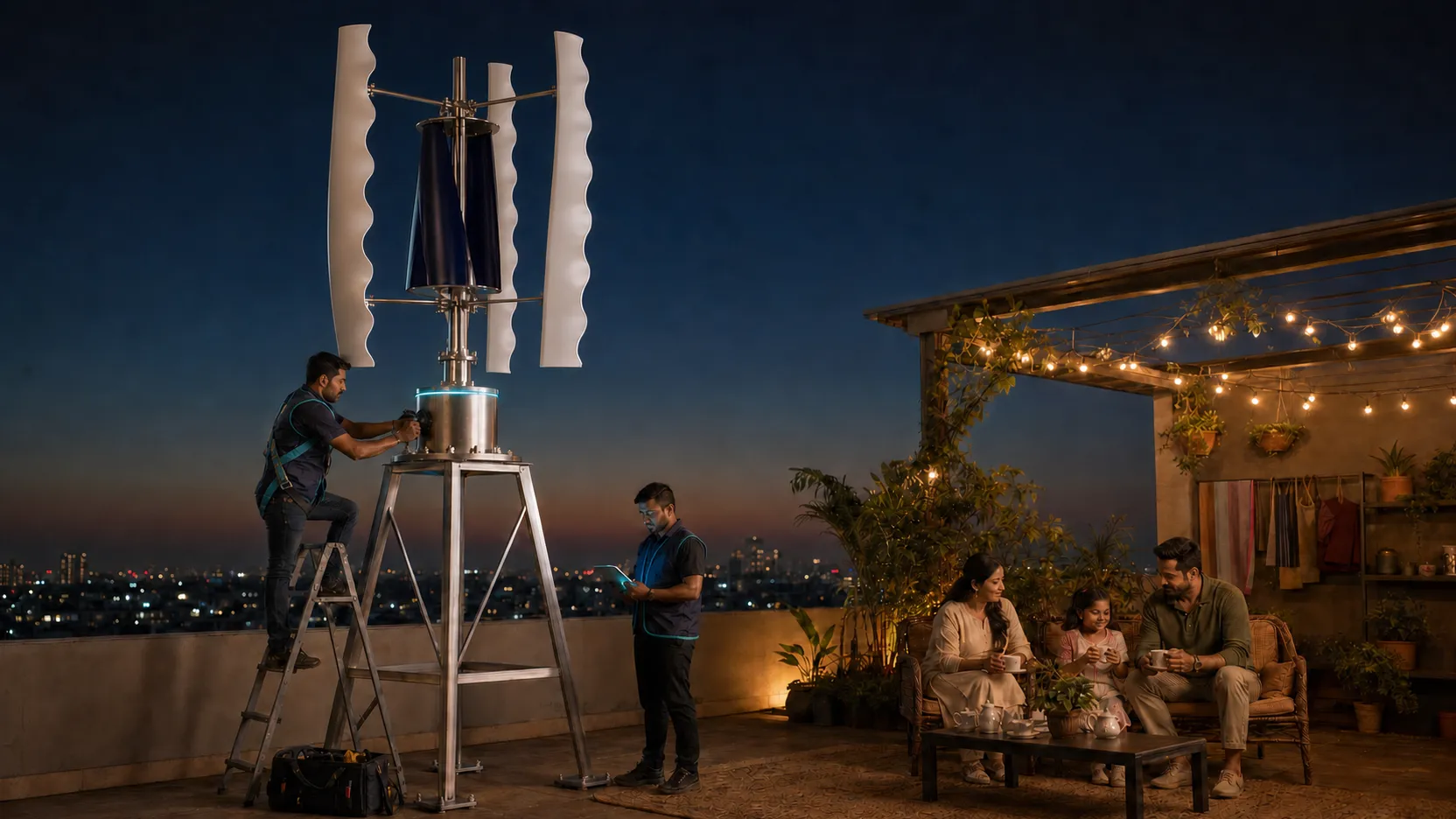
You're not buying a machine — you're subscribing to output.
What you’re actually signing up for
Strip away the hardware talk, and the customer’s side of the deal is simple: pay only for the electricity the turbine measurably makes, at a rate below what the electricity board charges for the same units.
No purchase price for the machine. No maintenance contract to renew. No decision about which technician to trust when something needs fixing.
The turbine either produces meter-verified units or it doesn’t — and the bill reflects exactly that.
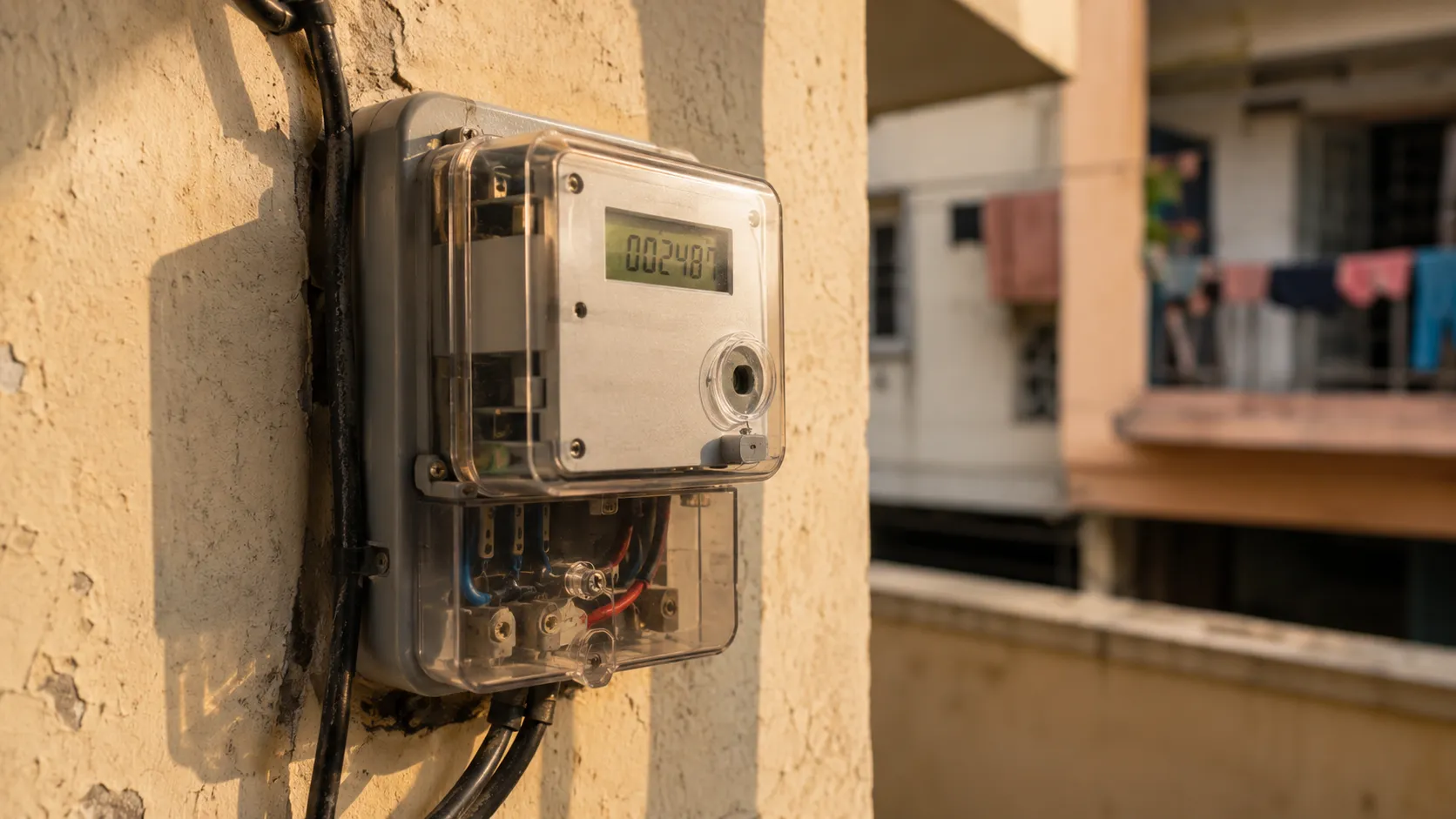
This is a genuinely different category of thing to buy than a rooftop machine. A homeowner isn’t purchasing a generator; they’re holding a subscription to output.
The terrace stays a terrace — one corner hosts the turbine on its rooftop stand, and the rest of the roof keeps doing whatever it was doing before: drying clothes, holding the water tank, hosting the evening chai.
Nothing about daily life on the roof needs to change for the bill to change.
For societies and RWAs, this also removes a question that usually kills rooftop projects before they start: who is responsible if the equipment fails years from now, long after the installer has moved on?
With a service model, the answer never changes. It’s always GIVARA, for as long as the turbine is up there.

GIVARA only earns when it spins.
The aligned incentive: GIVARA only earns when the machine actually works
When a company sells you a machine, its incentive ends at the sale. When it earns only from the electricity the machine makes, incentives flip — uptime becomes revenue, pushing GIVARA toward better monitoring, faster repairs, and honest siting from day one.
- The wind turns
- ↓
- Units reach your meter
- ↓
- Your bill drops
- ↓
- GIVARA earns
- ↓
- GIVARA maintains & monitors
That alignment is difficult to fake and expensive to promise without meaning it — which is exactly why GIVARA built its whole model around it.
GIVARA calls itself India’s first Wind Energy-as-a-Service platform because, as far as the current landscape shows, no one else in the country has built rooftop wind around this ownership structure — a company that keeps the equipment risk on its own books and gets paid only for what the machine produces. It’s a claim about the deal’s shape, not about the size of the machine or a number it hasn’t yet measured on your roof.
Explore where this model fits across homes, societies, and other use cases, or if you’d rather bring the model to your own site or community, look at what it takes to become a partner.
Frequently asked questions
If GIVARA owns the machine, what exactly am I paying for?
You pay for the electricity it generates — billed only on meter-verified units, priced below the electricity board’s rate for the same units. There’s no equipment purchase in that bill, and nothing to pay when the wind is quiet.
Who pays if the turbine gets damaged or needs repair?
GIVARA does. The machine, its insurance, and every repair stay GIVARA’s responsibility for as long as it’s installed on your roof. You don’t file a claim, and you don’t climb up to check on it.
Does this mean I lose control over what happens on my roof?
No. The turbine sits on one corner, on its own stand, and GIVARA handles it. The rest of the terrace — drying clothes, the water tank, evening time outdoors — stays exactly as it was. You still decide whether the site goes ahead at all, based on what the wind measurement shows.
What if my roof turns out not to have enough wind?
Then GIVARA says so, honestly, before any installation happens. Wind energy as a service only works if the machine actually generates — so a site that won’t support a turbine isn’t installed on. That’s not a loss for you; it’s the model doing what it’s supposed to do.
Is this the same as leasing or renting a solar system?
It rhymes with it, but the deal is simpler. There is no equipment rental and no fixed monthly instalment — you pay only for the units the machine actually generates, priced below the electricity board’s rate, and GIVARA keeps every equipment risk on its own books.
The full honest list of what’s covered — including the one thing that isn’t — is at who pays if it breaks. And if you’re wondering whether your roof qualifies at all, start with what actually works on Indian roofs.
Sign up for electricity — the machine stays our problem
TELL US ABOUT YOUR ROOF