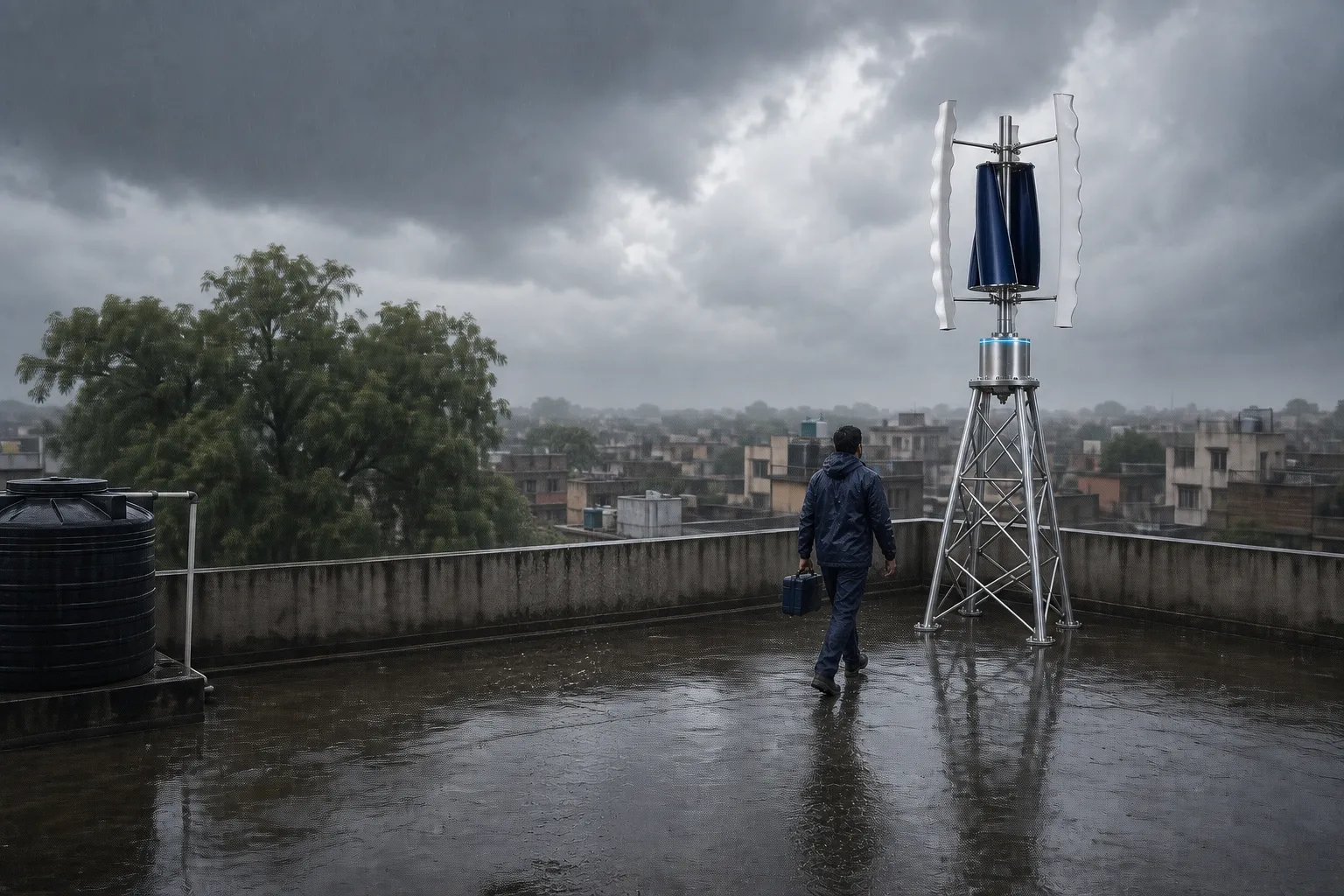
The first question people ask about a machine on their roof is what it makes. The second — usually asked a little more quietly — is what happens when something goes wrong with it.
It’s the better question, honestly. Anyone can describe a machine on a good day. The real shape of a deal shows up on a bad one.
So here is the whole answer — who pays for wind turbine repairs and maintenance, both halves of it, in plain language.
The long list — what GIVARA covers.
What GIVARA covers: storms, lightning, wear and every repair
Start with what you’re never paying for, because it’s almost everything.
GIVARA ONE comes as a service — GIVARA owns the machine, and ownership isn’t a paperwork detail — it’s who carries the bad days. Everything the sky and the years can do to a turbine sits on GIVARA’s side of the table:
- Storms. Wind is the machine’s job; too much wind is the machine’s problem, not yours. GIVARA ONE brakes itself in violent weather, and if a storm damages it anyway, that’s GIVARA’s repair.
- Lightning. The machine carries a lightning rod. If lightning wins anyway, that’s GIVARA’s repair.
- The monsoon. Rain, humidity, weeks of grey — the machine is built for Indian weather, and weather damage is GIVARA’s to fix.
- Wear. Bearings age. Parts fatigue. Nothing spinning for years stays new. Every worn part is GIVARA’s part to replace.
- Component failure. If something inside simply gives up — electronics, generator, controller — that’s GIVARA’s cost, full stop.
- Every service visit. Nobody bills you for the technician on your roof. You never climb up, never file an insurance claim, never keep a repair fund.
Notice what that list is: everything that happens between the machine and the world it lives in.
The weather is GIVARA’s problem. The years are GIVARA’s problem. The machine itself is GIVARA’s problem.
Six kinds of bad day on our side — one on yours.
That’s what “as a service” means, and it’s most of what could ever go wrong.
- Storms
- Lightning
- Monsoon
- Wear
- Component failure
- Every service visit
- Interference
The one thing that isn't covered.
The one thing that isn’t covered: interference
There’s one honest exception, and you can probably guess it, because it’s the same exception every fair arrangement has — damage a person causes.
The machine spins on its own, up at stand height, out of everyone’s way. It doesn’t need anything from the household — no cleaning, no adjusting, no touching at all. So the only way it gets hurt by a person is interference:
The weather is GIVARA's problem. Interference is the only thing that isn't.
Do not strike the blades with an object, deliberately or carelessly. Playing on the terrace is fine. Aiming at the machine is not.
Do not tie, hang or drape ropes, clotheslines, festival lights, antennas or decorations on the machine or its stand.
Never jam or obstruct the rotor with anything that stops it turning the way the wind wants to turn it.
Keep panels, wiring and connections closed. There's nothing inside for anyone but a GIVARA technician.
Do not get it “fixed” by a local electrician or anyone GIVARA didn't send.
No painting, stickers or other changes to the machine's surfaces.
Do not move the machine or change the roof around it in ways that undermine the stand without talking to GIVARA first.
If damage comes from interference like that, the repair is billed to the customer. That’s the entire exception.
It exists for a simple reason: every family that treats the machine with ordinary respect shouldn’t quietly subsidise the rare one that doesn’t.
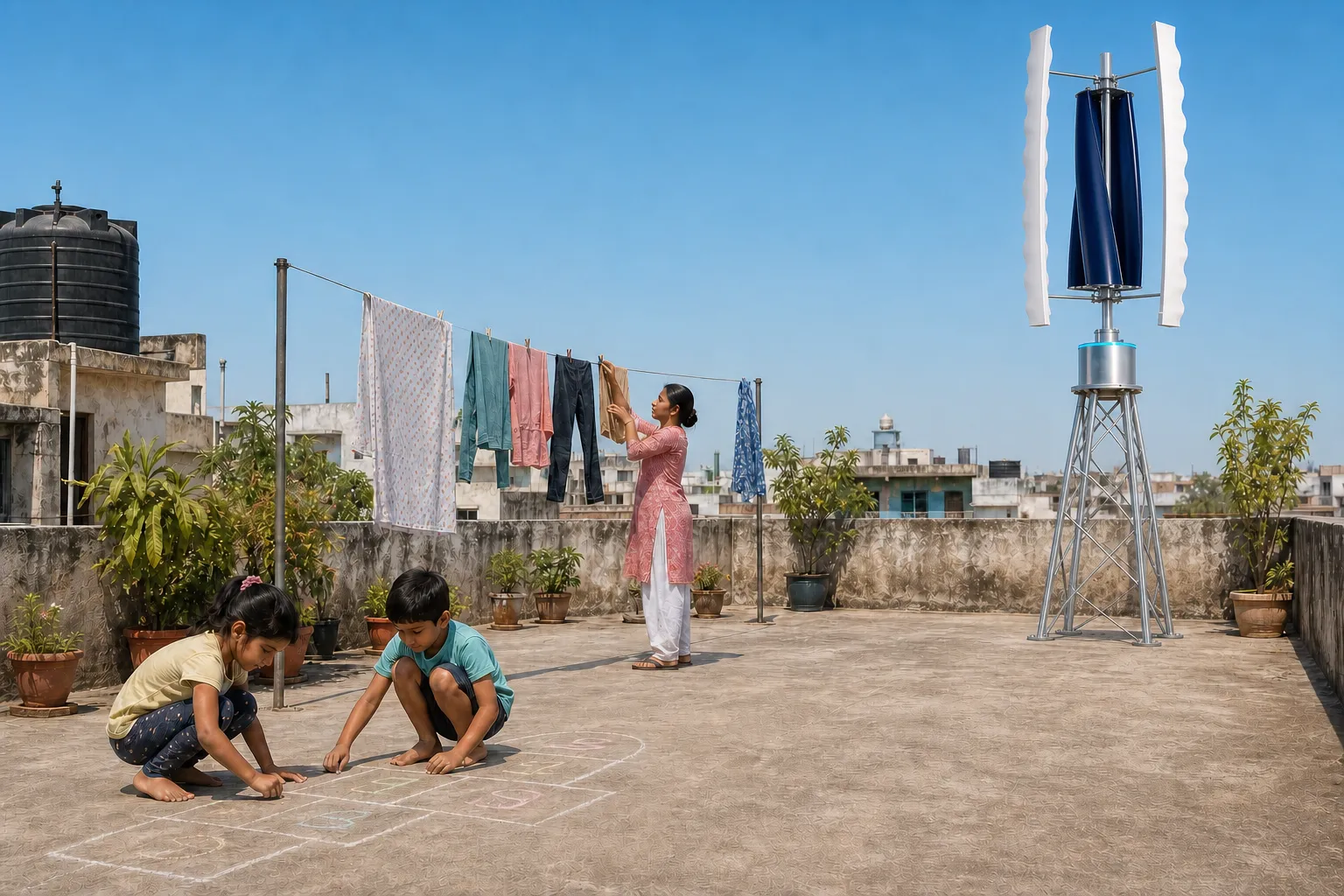
How anyone would even know.
How wind turbine damage gets assessed
Fair question. The answer is the same system that keeps the machine healthy: GIVARA Care watches every machine’s behaviour around the clock — vibration, rotation, output, the machine’s own sense of itself.
When something goes wrong, the data usually says what happened before a technician reaches the roof, and the technician’s inspection settles the rest.
This cuts both ways, deliberately. The same telemetry that shows a rotor was jammed also proves a storm was a storm. You’re never at the mercy of anyone’s guess — including GIVARA’s.
A genuine accident reads like a genuine accident, and genuine accidents get assessed as what they are, case by case, like any fair claim.
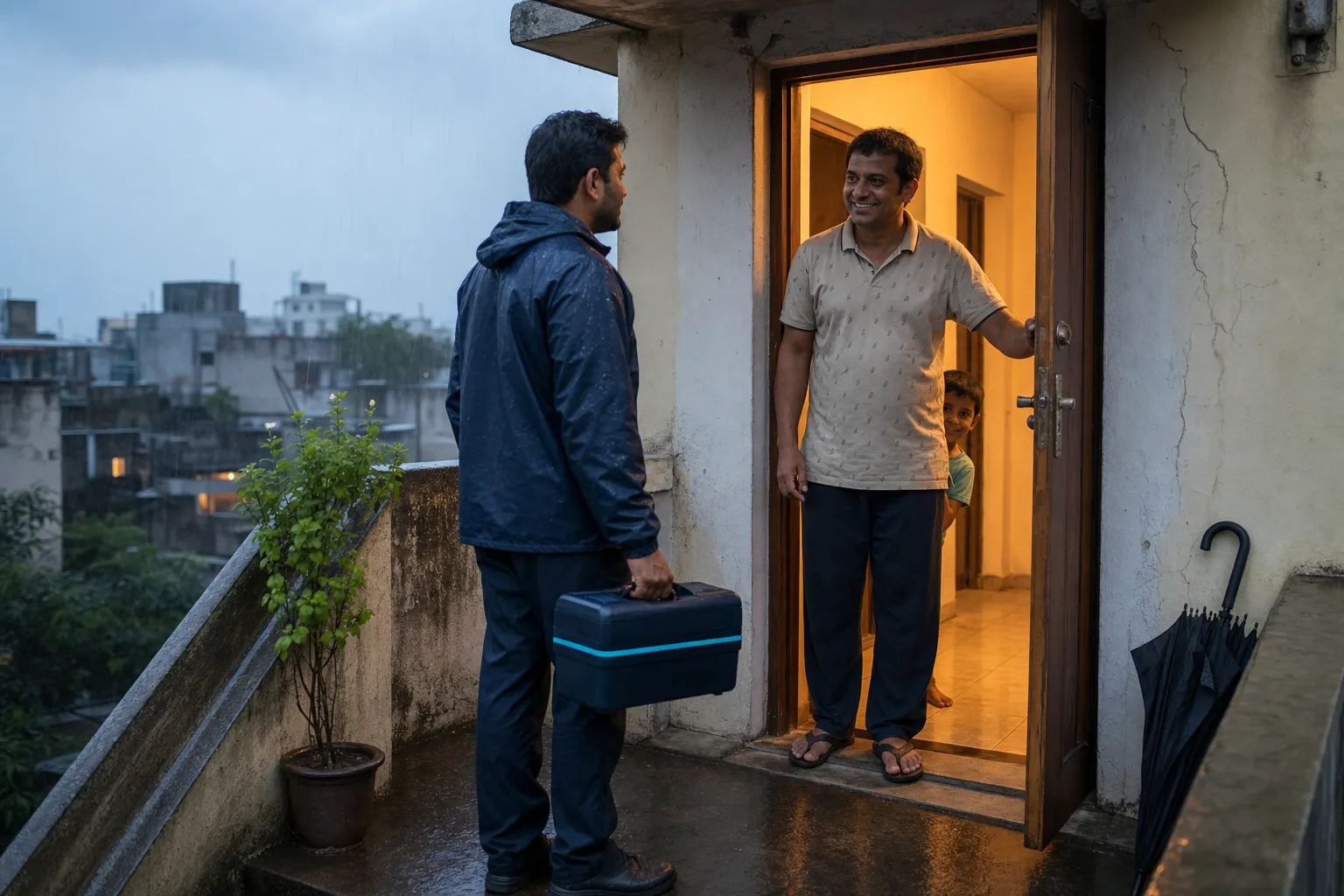
Why this arrangement is the honest one.
Why this is the honest arrangement
A company that covered nothing would just be selling you a machine with extra steps. A company that promised to cover absolutely anything — deliberate damage included — would be quietly charging every careful family for the careless few.
The line GIVARA draws — the sky and the years are ours, interference is yours — is the line that keeps the deal clean on both sides: the strongest possible promise on everything that matters, and one honest exception narrow enough to fit in a sentence.
It’s also, not coincidentally, the arrangement that needs the least fine print. Don’t hit it, don’t hang things on it, don’t open it, don’t let anyone else “fix” it.
Everything else — truly everything else — is GIVARA’s problem, and GIVARA prefers it that way. A machine nobody interferes with is a machine that spins, and GIVARA only earns when it spins.
The machine itself, and the service around it, are described honestly on the GIVARA ONE page.
Frequently asked questions
My child’s cricket ball hit the machine. Is that “interference”?
A stray ball is a stray ball — that’s what case-by-case assessment is for, and the machine’s own data plus a technician’s look usually make the story obvious. The exception exists for deliberate or careless interference, not for living a normal life on your own terrace.
Do I need to maintain or clean it at all?
No. There is nothing on the machine that needs anything from you — no cleaning, no oiling, no checking. The healthiest thing a household can do for it is exactly nothing.
Do I pay for maintenance, servicing or an AMC?
No. There is no AMC, no service charge and no repair fund to keep. GIVARA owns and maintains the machine for its working life — you only pay for the electricity it generates, priced below the electricity board’s rate.
What if a neighbour or a stranger damages it?
Tell GIVARA what you know, and the assessment works the same way: telemetry plus inspection. You’re not automatically liable for the act of someone you didn’t invite onto your roof — that’s precisely why cause matters more than location.
Where is all this written formally?
The service agreement you sign before installation carries the formal version of everything on this page. This article is the plain-language telling; the agreement is the binding one, and they say the same thing.
The numbers conversation lives at what a home wind turbine costs. And if you’re still wondering whether your roof qualifies in the first place, start with what actually works on Indian roofs.
One honest exception — everything else is GIVARA’s problem
TELL US ABOUT YOUR ROOF